
No matter how golden and magnificent the centerpiece roast turkey looks on the Thanksgiving table, every holiday host knows the truth: the side dish guests eagerly pile highest onto their plates is a generous, steaming mound of Classic Thanksgiving Herb Stuffing. With its crunchy, buttery golden crust, tender herb-soaked interior, and fragrant melody of sautéed celery, sweet onions, and fresh fall herbs, it is the quintessential soul of the holiday dinner.

For decades, family cooks have debated the merits of cooking stuffing inside the bird versus baking dressing in a separate casserole dish. Food safety and culinary science have firmly settled the score: baking your herb stuffing in a dedicated ceramic dish guarantees an unbeatable contrast between a shatteringly crisp top layer and a moist, savory interior, all while keeping your roasted turkey perfectly juicy without overcooking.
The Secrets to Non-Mushy, Perfectly Crisp Thanksgiving Stuffing
- Dry Your Bread Bone-Dry: Fresh bread absorbs too much moisture too quickly and collapses into gummy mush. Oven-drying artisan bread cubes until they are as hard as croutons allows them to act like thirsty sponges, soaking up rich herb broth while maintaining structural integrity.
- Generous Golden Butter: Real unsalted butter is non-negotiable here. Slowly sweating sweet yellow onions and crisp celery in foamy butter coaxes out their natural sweetness and creates the aromatic foundation that defines authentic holiday flavor.
- Abundant Fresh Herbs: While dried poultry seasoning has its nostalgic place, mincing fresh garden sage, thyme, and rosemary elevates the aroma tenfold, filling the entire house with the unmistakable fragrance of Thanksgiving.
- The Egg Binder Secret: Whisking two whole eggs into the warmed broth creates a subtle custard that gently binds the stuffing, ensuring clean, fluffy scoops that hold together on your dinner plate without crumbling.
Selecting the Ultimate Bread for Homemade Stuffing
The bread you choose sets the stage for the entire dish. Rather than buying pre-seasoned grocery store bags of breadcrumbs, crafting your own blend creates incomparable texture and flavor:
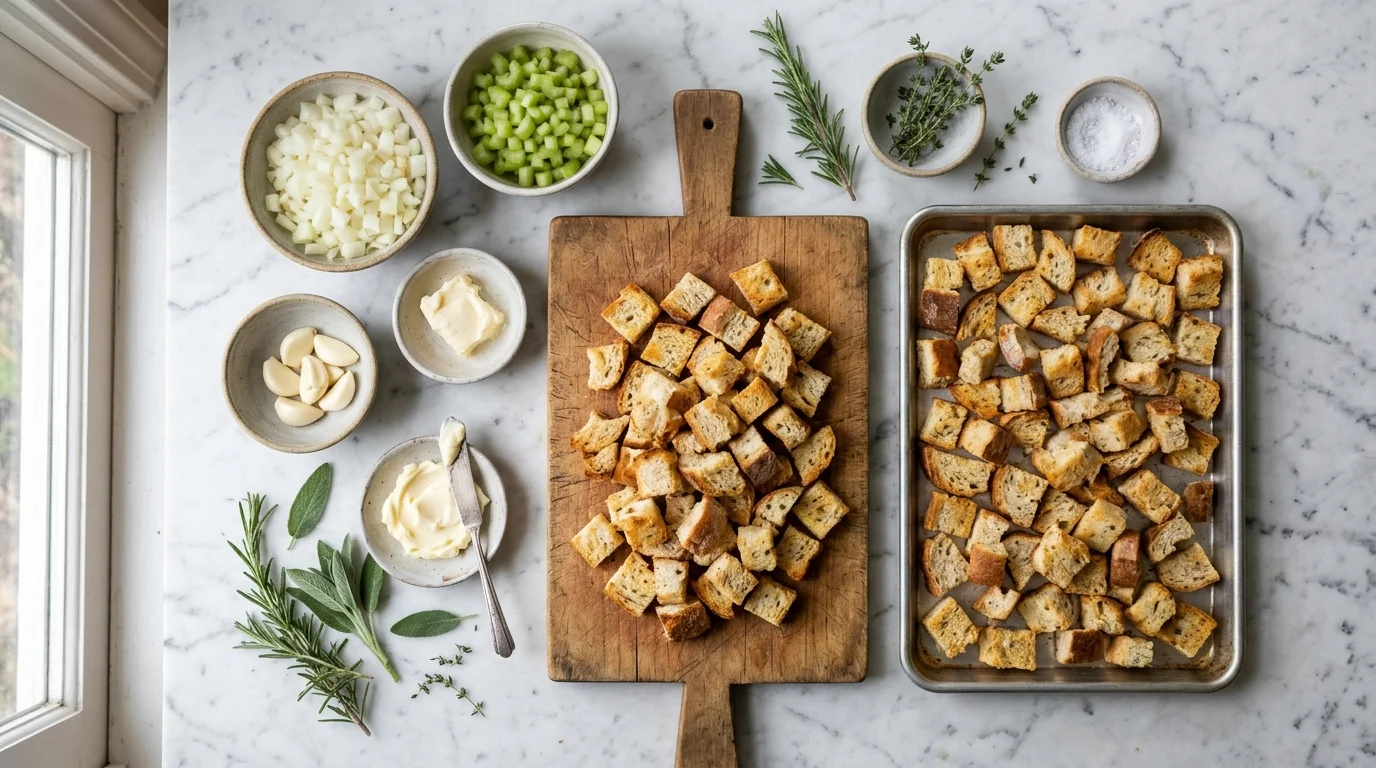
- Artisan Sourdough or French Loaf: Hearty rustic loaves with an open crumb and firm crust provide fantastic chew and prevent sogginess.
- Brioche or Challah: Blending in a quarter part of rich, egg-based brioche adds buttery luxury and a subtle sweetness that pairs gorgeously with savory herbs.
- Oven-Drying Method: Cut your bread into 3/4-inch uniform cubes. Bake at 300°F (150°C) for 20 minutes until completely dry to the core. This method is far superior to simply leaving stale bread on the counter, as it evaporates internal moisture while lightly toasting the crust.
Thanksgiving Day Make-Ahead Strategy & Oven Game Plan
Thanksgiving dinner is a masterclass in kitchen orchestration. Here is how to prepare this stuffing with zero stress on the big holiday morning:
- 3 Days in Advance: Cut and oven-dry your bread cubes. Once completely cool, store them in a large paper grocery bag or loose container at room temperature. They will remain perfectly dry and ready.
- 1 Day in Advance: Sauté the onions, celery, garlic, and fresh herbs in butter. Cool and refrigerate in an airtight container. You can also assemble the entire casserole unbaked: toss the bread, aromatics, broth, and eggs, transfer to your baking dish, cover tightly with foil, and refrigerate for up to 24 hours.
- The Holiday Bake: When your roasted turkey is pulled from the oven to rest on the carving board (a crucial 30 to 45-minute window), adjust your oven to 375°F (190°C). Slide the stuffing into the oven covered with foil for 30 minutes to heat through, then uncover for the final 15 minutes to achieve that glorious crunchy, deep golden-brown crust right as the turkey is carved.
How to Store, Freeze, and Reheat Holiday Leftovers
- Refrigerating: Store cooled leftover stuffing in an airtight container in the refrigerator for up to 4 days.
- Reheating for Maximum Crunch: Reheat in a 350°F (175°C) oven or toaster oven for 12 to 15 minutes. Dot the top with a tiny fleck of butter to re-crisp the toasted bread cubes. Avoid the microwave if possible, which makes stuffing spongy.
- Freezing: Baked stuffing freezes remarkably well for up to 2 months. Wrap tightly in freezer-safe foil. Thaw in the refrigerator overnight and reheat in a 350°F oven until hot and crisp.
- Leftover Inspiration: Press leftover stuffing into a waffle iron for the ultimate Day-After-Thanksgiving Stuffing Waffles topped with shredded turkey, warm gravy, and fried eggs!
Frequently Asked Questions
Can I add sausage, apples, or dried cranberries?
Yes! To turn this into a hearty Sausage Herb Stuffing, brown 1 pound of mild or sage ground pork sausage in your skillet before cooking the vegetables, draining excess fat. For a tart-sweet autumn contrast, toss in 1 diced Honeycrisp apple with the celery or 1/2 cup of dried cranberries with the bread cubes.
Can I make this vegetarian or vegan?
Easily. Replace the chicken broth with a flavorful, rich vegetable broth. To make it strictly vegan, use high-quality plant-based butter and omit the eggs (increase the vegetable broth by 1/4 cup so the bread remains moist).
Why is my stuffing dry or crumbly?
Stuffing can become dry if too little broth was added or if it baked uncovered for too long. Ensure your bread cubes are thoroughly saturated before going into the dish—they should feel moist and heavy like a sponge, but not waterlogged. Baking covered for the first 30 minutes traps steam to keep the center custardy.
What is the difference between stuffing and dressing?
Historically, “stuffing” refers to seasoned bread mixtures cooked inside the cavity of poultry, while “dressing” is baked separately in a casserole dish. Today the terms are used interchangeably across America, though baking it in a dish (dressing) produces vastly superior texture and safer cooking temperatures.
Classic Thanksgiving Herb Stuffing (Traditional Dressing Recipe)
Ingredients
Method
- Dry the Bread: Preheat oven to 300°F (150°C). Spread bread cubes across two large rimmed baking sheets. Bake for 18 to 22 minutes, stirring halfway through, until completely dry, hard, and lightly pale golden (like croutons). Let cool completely.
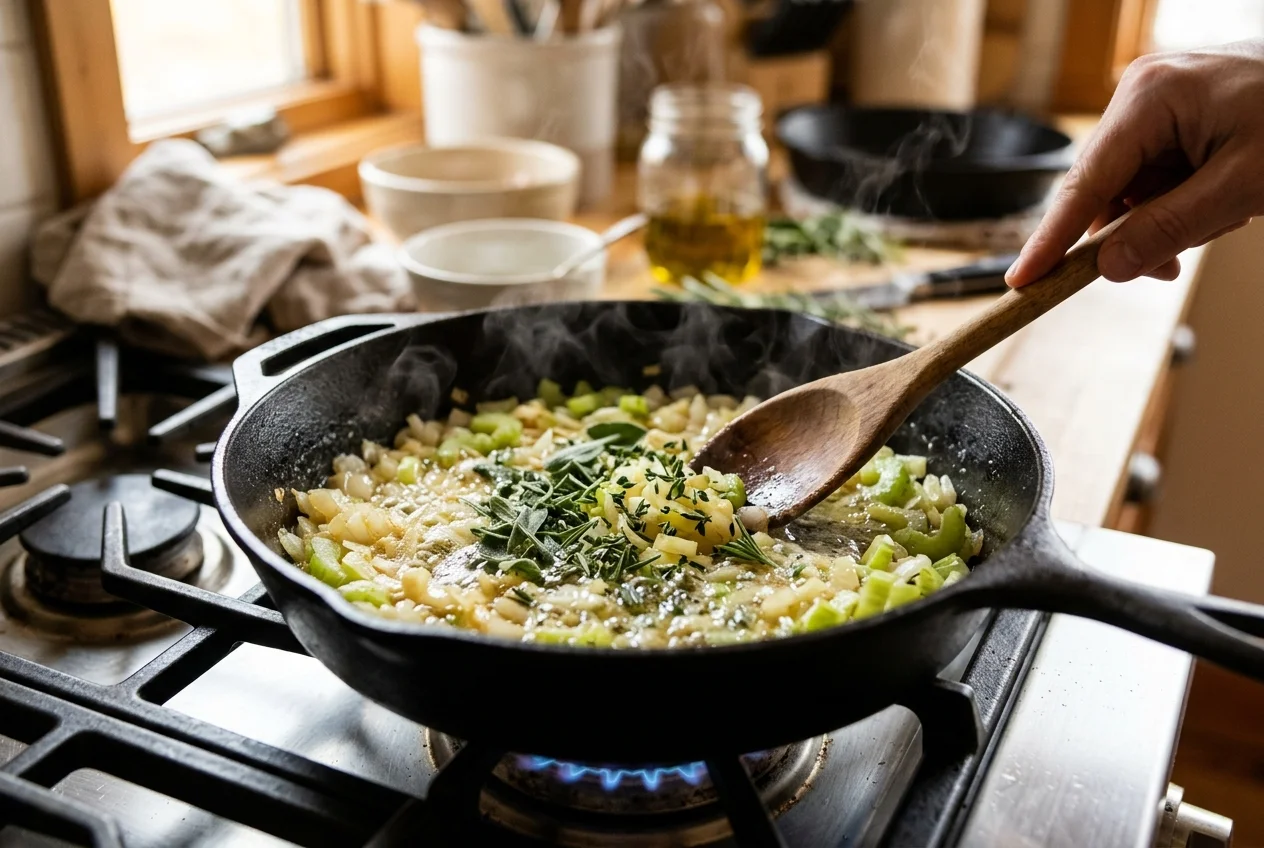
- Sauté the Aromatics: Increase oven temperature to 375°F (190°C). Butter a 9x13-inch (or 3-quart) ceramic baking dish with 1 tablespoon of butter. In a large skillet, melt 8 tablespoons (1 stick) of butter over medium heat. Add diced onions and celery, cooking for 8 to 10 minutes until soft and translucent. Stir in minced garlic, fresh sage, thyme, rosemary, salt, and pepper, cooking for 2 minutes until immensely fragrant.
- Combine & Moisten: Transfer the dried bread cubes into an extra-large mixing bowl. Pour the warm buttery vegetable and herb mixture over the bread, tossing with a large wooden spoon. In a glass measuring cup, whisk 2.5 cups of warm broth with the beaten eggs and chopped fresh parsley. Pour evenly over the bread, gently tossing until all cubes are evenly saturated. (If the bread still feels dry, add the remaining 1/2 cup of broth).
- Transfer to Baking Dish: Transfer the stuffing into the prepared baking dish without pressing down hard, keeping it light and airy so heat can circulate. Dot the top with the remaining 2 tablespoons of butter cut into small pieces.
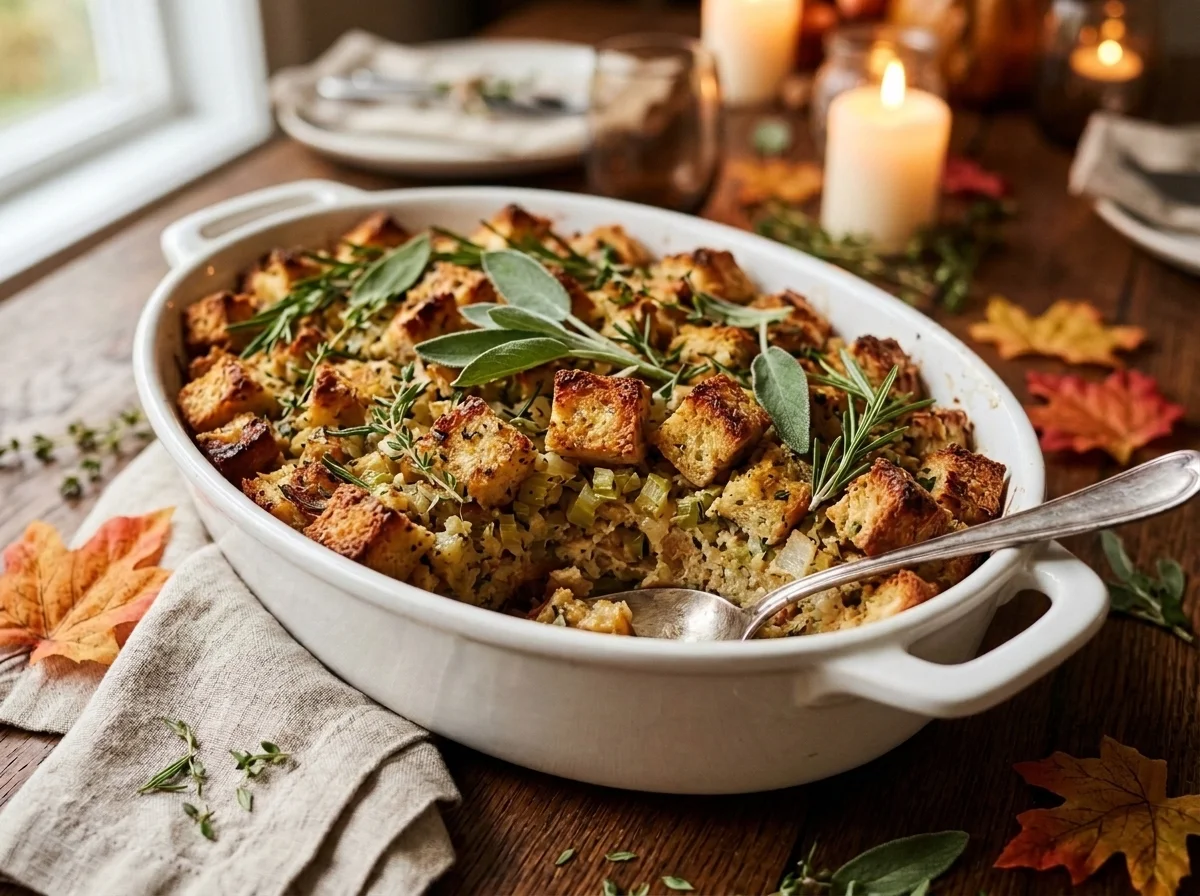
- Bake to Golden Perfection: Cover the dish tightly with aluminum foil and bake at 375°F (190°C) for 30 minutes so the interior heats through and steams. Uncover and continue baking for 15 to 20 minutes until the top is deeply golden brown, crunchy, and irresistible. Let rest 10 minutes before serving warm.

Leave a Comment