
If there is one dessert that embodies the warmth, soul, and cherished culinary heritage of Southern Thanksgiving feasts, it is an authentic Classic Southern Sweet Potato Pie. With its delicate, shatteringly flaky all-butter crust cradling an intensely silky, spiced amber custard, this heirloom pie is a celebration of autumn comfort at its absolute finest.

Every holiday season, families gather around tables piled high with savory roast turkey, stuffing, and bubbling casseroles, but the grand finale is what lingers longest in memory. Unlike overly cloying commercial pies, this scratch-made sweet potato pie strikes the quintessential balance between natural caramelized sweetness and cozy holiday warmth.
Sweet Potato Pie vs. Pumpkin Pie: What Sets Them Apart?
While pumpkin pie often takes center stage in Northern holiday menus, Southern holiday bakers know that sweet potato pie offers a distinctly superior depth of flavor and luscious mouthfeel:
- Natural Caramel Sweetness: Canned pumpkin purée is naturally earthy, squash-heavy, and slightly bitter until masked with cups of sugar. Sweet potatoes, when slowly roasted, undergo enzymatic starch conversion, developing deep caramel and honey notes that taste pure and rich on their own.
- Silky, Velvety Custard Texture: Pumpkin pies often lean toward a dense, jelly-like consistency. In contrast, when roasted sweet potatoes are whipped with melted butter and evaporated milk, the texture transforms into a cloud-like, silky custard that melts luxuriously on the tongue.
- Balanced Spice Profile: Pumpkin pie spice blends are frequently heavy on aggressive allspice and ginger. Traditional Southern sweet potato pie focuses on warm ground cinnamon and fragrant freshly grated nutmeg, allowing the sweet potato’s comforting profile to remain the undisputed star.
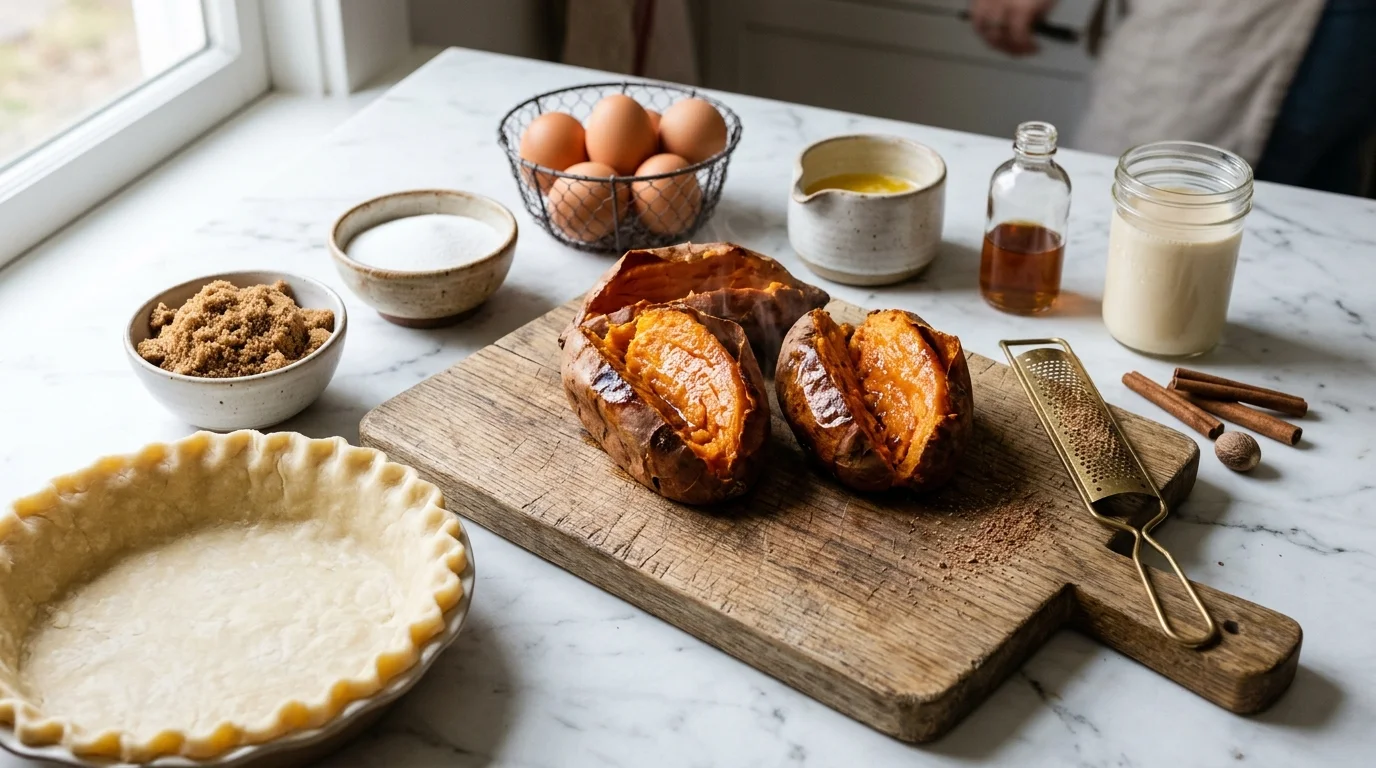
The Golden Culinary Secrets to Bakery-Quality Sweet Potato Pie
1. Roast the Sweet Potatoes—Never Boil Them
The single greatest mistake made when baking sweet potato pie is boiling the tubers in water. Boiling waterlogs the flesh, diluting the flavor and leaving excess moisture that inevitably makes your pie filling runny or causes your crust bottom to turn into a soggy mess. Roasting whole sweet potatoes at 400°F (200°C) caramelizes their natural sugars and concentrates their rich flavors while keeping the purée dense and velvety.
2. The Electric Mixer Whipping Trick
Old-fashioned bakers used to press cooked sweet potatoes through a colander or fine-mesh sieve to catch fibrous strands. Modern kitchens have a much easier secret: use an electric hand mixer or immersion blender. As you beat the warm roasted sweet potato flesh with melted butter on medium speed for 2 minutes, the tough stringy fibers naturally wrap around the beaters! Simply stop the mixer, discard the fibers, and you are left with perfectly smooth, cloud-like sweet potato purée.
3. Evaporated Milk for Unmatched Richness
Traditional Southern cooks swear by evaporated milk over regular milk or even heavy cream alone. Evaporated milk has had roughly 60% of its water removed through gentle evaporation, leaving concentrated milk solids that create an extraordinarily lush custard that sets beautifully without curdling or weeping liquid over time.
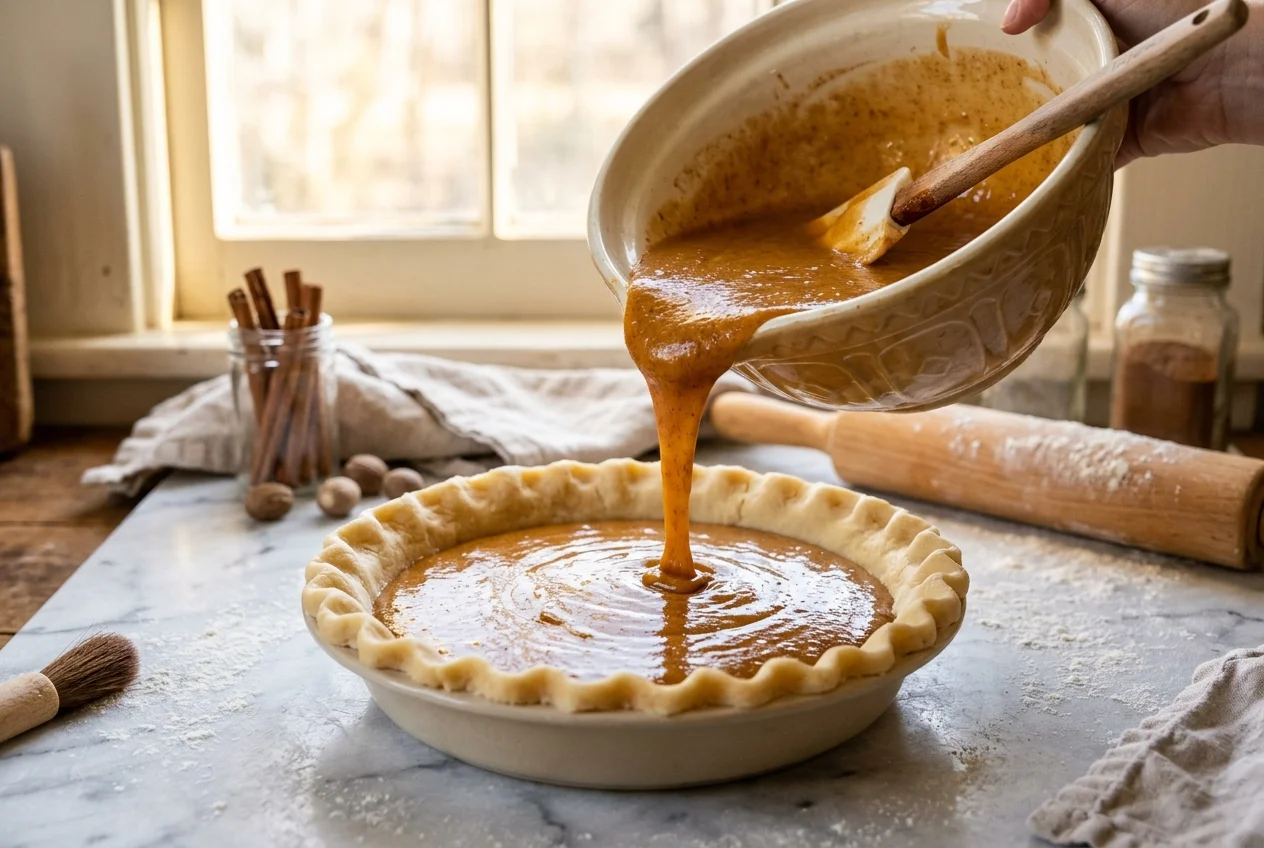
Step-by-Step Guide to the Perfect Bake
- Seal the Pie Crust: Lightly brush the bottom and inner fluted sides of your unbaked pie crust with a whisked egg white before adding the filling. This creates an invisible culinary barrier that repels custard moisture, ensuring the crust bakes up crisp and flaky from bottom to edge.
- Low and Slow at 350°F (175°C): Custard pies demand gentle heat. Baking at 350°F allows the eggs to coagulate smoothly without puffing aggressively or collapsing into sunken craters.
- The “Jiggle Test”: You will know your sweet potato pie is done between the 50 and 55-minute mark. Gently nudge the pie pan: the outer 2 inches should be set and puffed slightly, while the center retains a delicate, subtle jiggle (like set gelatin). Do not wait for the center to become stiff in the oven—the pie will continue setting as it cools.
- The Cooling Rule: Allow the pie to cool undisturbed on a wire rack at room temperature for at least 2 to 3 hours. Slicing into a warm custard pie will cause it to slump; cooling allows the sugars and egg proteins to knit into clean, beautiful slices.
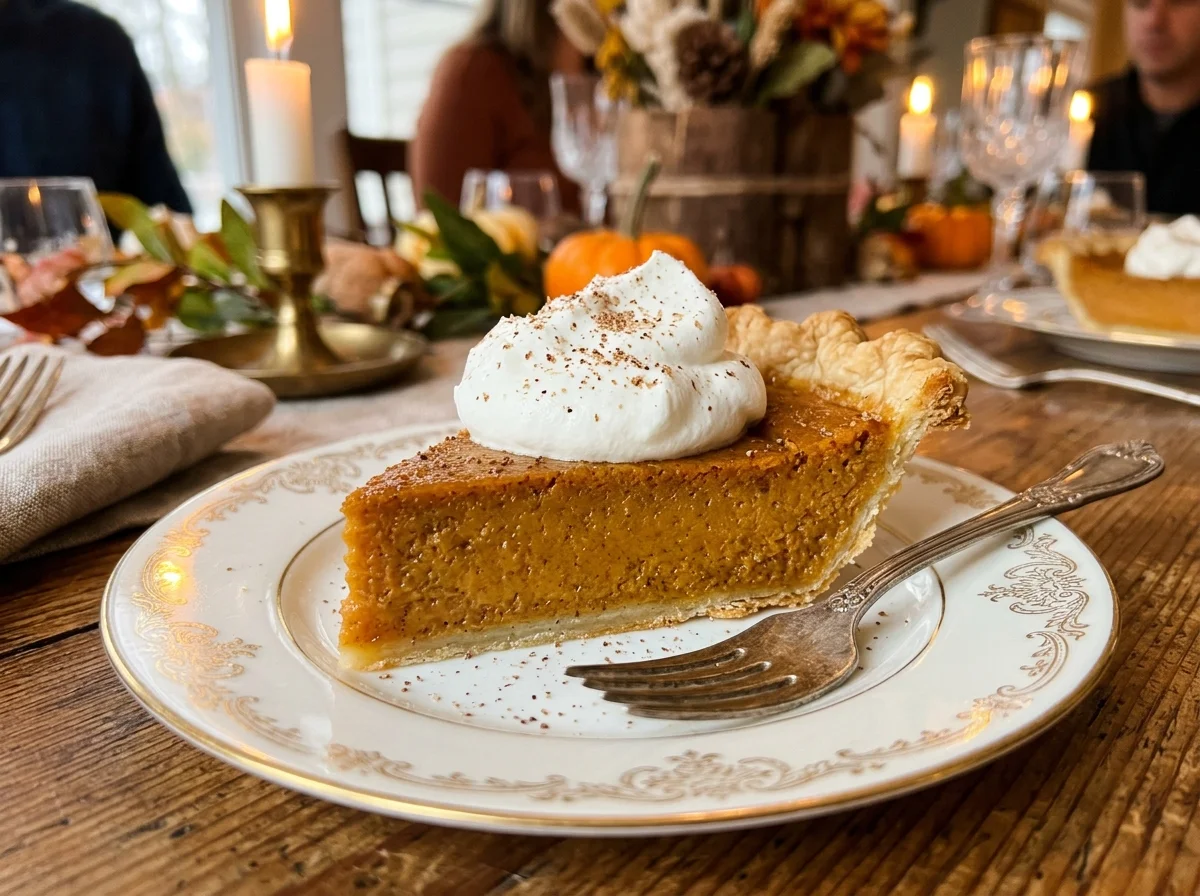
Thanksgiving Day Make-Ahead Strategy & Oven Game Plan
The true genius of sweet potato pie for Thanksgiving hostesses is that it is best made ahead of time:
- Bake 1 to 2 Days Ahead: Sweet potato pie actually tastes richer on day two as the spices, vanilla, and sweet potato meld together. Bake your pie the Tuesday or Wednesday before Thanksgiving, let it cool completely, cover loosely with foil or a pie dome, and refrigerate.
- Save Holiday Oven Space: On Thanksgiving morning, your oven is occupied by the roast turkey, stuffing, and hot casseroles. With your sweet potato pie already baked and chilled, you do not need a single inch of holiday oven space during crunch time!
- Serving Temperature: Remove the pie from the refrigerator 30 to 45 minutes before serving to bring it to cool room temperature, allowing the rich butter in the crust and filling to soften into peak melt-in-your-mouth perfection.
How to Store, Chill, and Freeze Leftovers
- Refrigeration: Because of the eggs and evaporated milk, sweet potato pie should always be refrigerated. Cover loosely with plastic wrap or store under a cake dome for up to 5 days.
- Freezing Whole or Slices: Sweet potato pie freezes exceptionally well. Let the pie cool completely, wrap tightly in multiple layers of plastic wrap, then seal in heavy-duty aluminum foil. Freeze for up to 3 months. Thaw overnight in the refrigerator before serving.
- Serving Suggestion: Always crown each slice with a dollop of fresh vanilla bean whipped cream and an extra grating of whole nutmeg. For an adult indulgence, add a splash of bourbon to the whipped cream!
Frequently Asked Questions
Can I use canned sweet potato purée?
Yes, in a pinch you can use 100% pure canned sweet potato purée. However, whole roasted fresh sweet potatoes yield vastly superior flavor, natural caramelization, and texture. If using canned purée, ensure you drain any excess water through cheesecloth.
Can I add bourbon or pecan toppings?
Absolutely! A splash of quality Kentucky bourbon (about 1 to 2 tablespoons) folded into the custard alongside the vanilla extract adds wonderful oak and caramel depth. You can also press toasted candied pecans onto the crust rim before baking.
Why did my sweet potato pie crack on top?
Cracks occur when custard is overcooked or cooled too rapidly in a cold draft. Remember to pull the pie when the center still has a gentle wobble, and let it cool gradually at room temperature away from open windows.
Should I pre-bake (blind bake) the pie crust?
For this recipe, blind baking is not strictly required if you use our egg white wash technique and bake on the lower-middle oven rack. However, if you love an ultra-crisp bottom crust, you can partially blind-bake the shell for 10 minutes with pie weights at 375°F before filling.
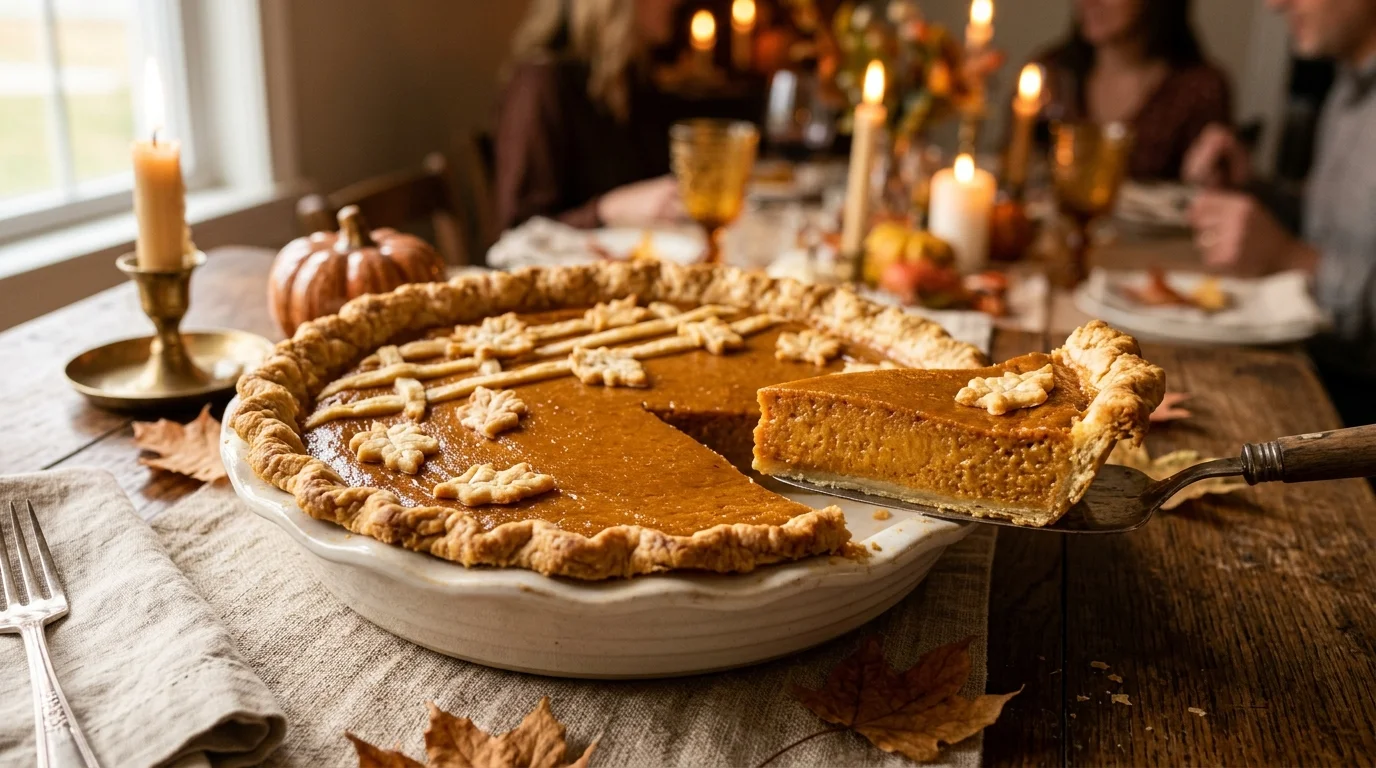
Classic Southern Sweet Potato Pie Recipe
Ingredients
Method
- Preheat your oven to 400°F (200°C). Scrub the sweet potatoes clean and pierce each potato 5 to 6 times all over with a fork to allow steam to escape. Place on a foil-lined baking sheet.
- Roast the sweet potatoes for 50 to 60 minutes, until they are knife-tender to the core and naturally caramelizing. Remove from the oven and let cool until comfortable to handle, about 15 minutes.
- Lower your oven temperature to 350°F (175°C). Roll out your pie dough into a 9-inch ceramic pie dish, crimping the edges decoratively. Brush the bottom and inner sides with beaten egg white to form a protective seal against moisture. Chill the crust in the refrigerator while making the filling.
- Peel away the papery skins from the warm sweet potatoes. Measure out 2 packed cups of sweet potato flesh into a large mixing bowl. Using an electric hand mixer or immersion blender, beat the sweet potatoes on medium speed for 2 minutes with the melted butter until silky smooth. Any fibrous strings will naturally catch onto the beaters; wipe them clean.
- Add granulated sugar, light brown sugar, cinnamon, freshly grated nutmeg, ground ginger, and salt. Beat on medium-low until fully incorporated.
- Add the room-temperature eggs one at a time, beating thoroughly after each addition. Pour in the evaporated milk and vanilla extract, beating on low speed until you have a glossy, pourable, velvety custard batter.
- Pour the sweet potato custard filling into the chilled pie shell, smoothing the surface evenly with an offset spatula.
- Place the pie on the center rack of your 350°F (175°C) oven. Bake for 50 to 55 minutes. Check at the 30-minute mark; if the crust edges are browning too rapidly, protect them with a pie shield or thin foil ring.
- Perform the "Jiggle Test": the outer edges of the pie should be set and slightly puffed, while the very center retains a gentle, subtle gelatin-like jiggle. A knife inserted 1 inch from the center should come out clean. Avoid overbaking, which causes custard cracks.
- Transfer the pie to a wire cooling rack and let cool completely at room temperature for at least 2 to 3 hours. The custard will firm up and develop its signature silky texture as it cools. Chill in the refrigerator for at least 1 hour before slicing.
- Whip chilled heavy cream with powdered sugar and vanilla bean paste until soft peaks form. Slice the pie with a sharp chef knife wiped clean between cuts, top each slice with a dollop of cream, and finish with a delicate dusting of freshly grated nutmeg.



Leave a Comment